At Maliyan Park in north Watson, the story starts with the trees, the surrounding neighbourhood and the Ngunnawal contributions that give the place its identity.
A swing could be installed in almost any suburb. The trees around it, the paths leading to it and the stories a place carries are harder to exchange.
That distinction gives Maliyan Park in north Watson an interesting place in the conversation about neighbourhood design. The ACT Government’s brief brought together familiar requirements—play, exercise, seating and paths—with a more particular ambition: to make space for Ngunnawal history, culture and connection to Country in the everyday life of a local park.
Start with the place around the playground
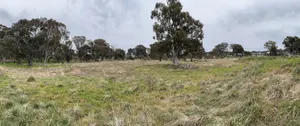
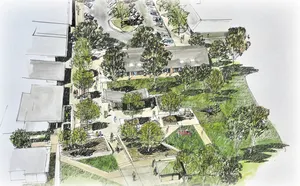
North Watson has grown through a mix of townhouses, apartments and detached homes. Its paths and open spaces connect it with the older suburb, and Section 76 sits within that changing neighbourhood. The park was planned as one part of a larger place, with links to existing paths and future residential development.
The government’s place-planning work with the community identified the importance of local character, walking and cycling connections, and the landscape around new housing. For a client commissioning public space, that is a useful starting point: how will a park fit into the ordinary routes and routines of the people living nearby?
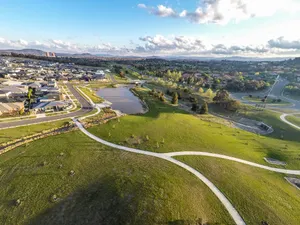
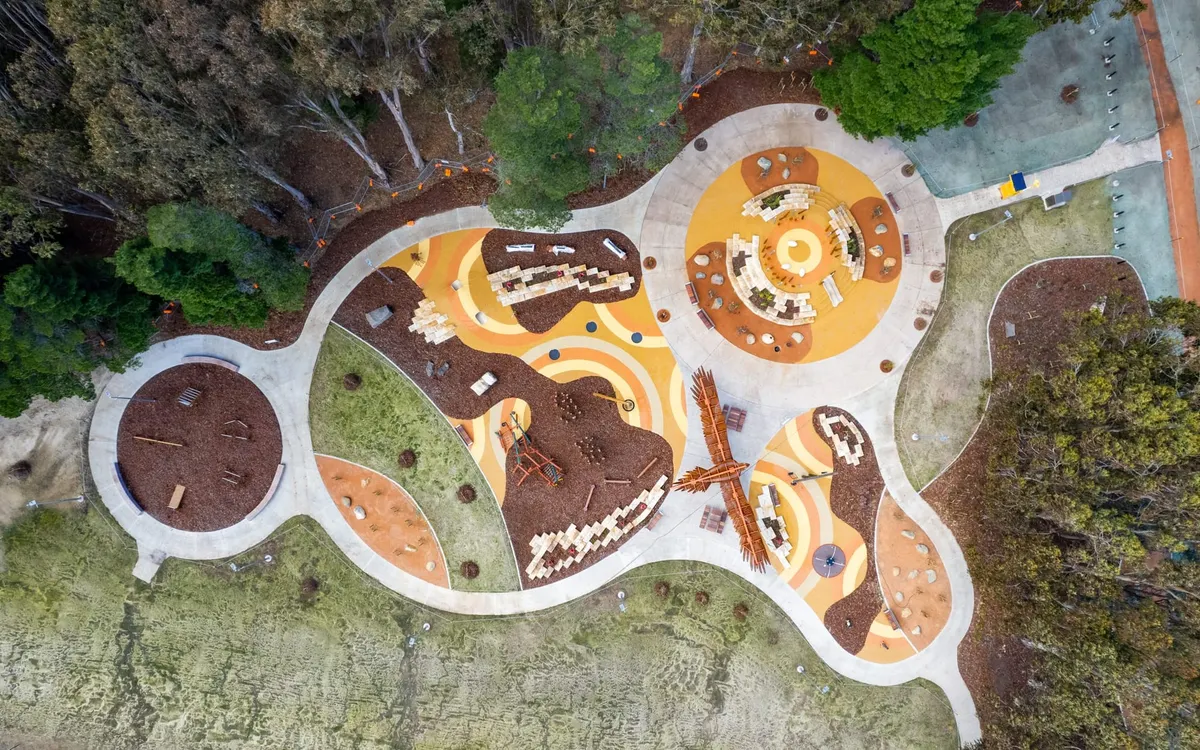
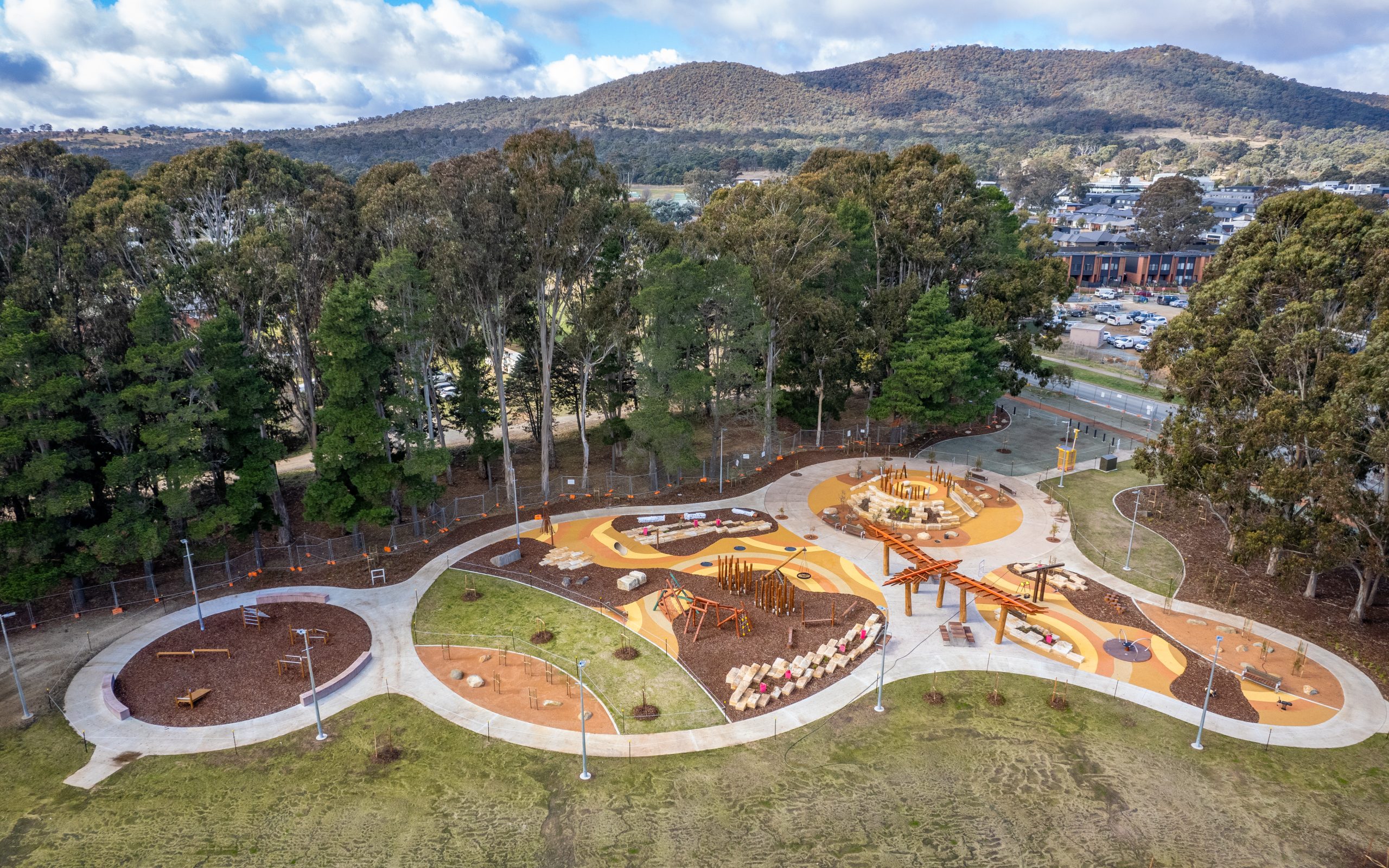
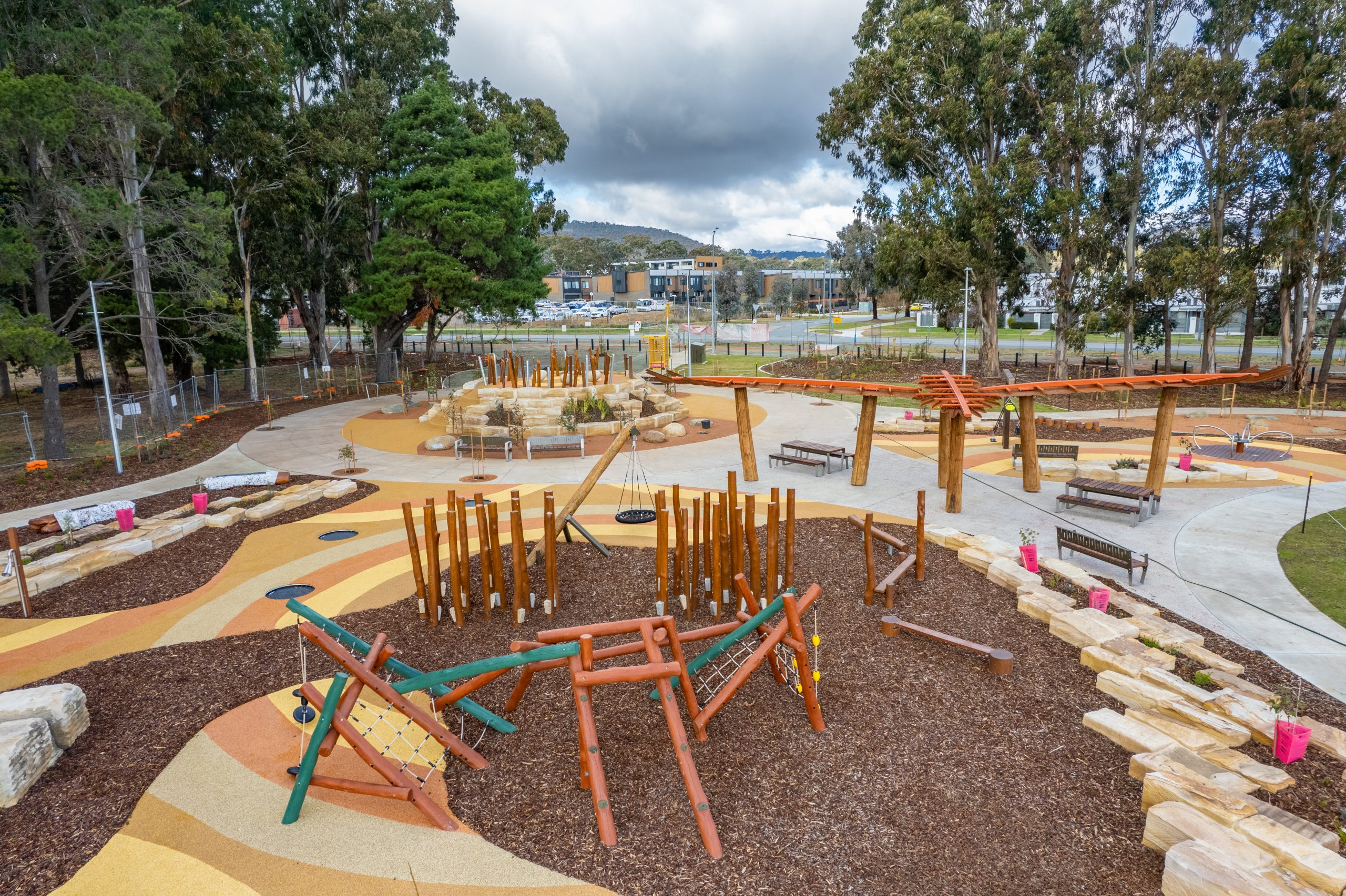
The supplied July 2024 aerial photographs make the setting clear. A substantial band of established trees frames the play spaces. Curving paths run around and between them, with open grass beside the more concentrated activity areas. The equipment occupies part of a landscape rather than filling the whole picture.
Keeping that wider view in a brief gives designers more to work with. A place to kick a ball, a seat beside a path and room to watch children play all need space of their own. They also need a sensible relationship to one another.
Give local stories a physical place
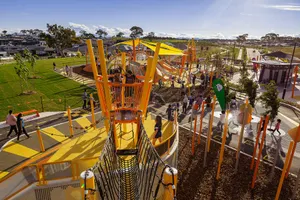
The Maliyan structure represents a wedge-tailed eagle. Members of the Dhawura Ngunnawal Caring for Country Committee and Representative Aboriginal Organisations contributed to the design’s development. Ngunnawal artworks, interpretive signage and selected endemic plants bring further cultural references into the park.
For those commissioning similar projects, the relevant question is who helps decide what a place says. A designer can arrange paths and materials, but cultural meaning comes from the people with the knowledge and authority to share it. The client’s brief made provision for that involvement and for integrating the resulting artwork into the landscape.
The photographs show the eagle form extending above picnic tables near the centre of the park. Around it, timber uprights, stone edges and curved routes give the space a character that can be read both from above and at the scale of a child moving through it.
Make room for the people who come along
The original brief paid attention to adults supervising children, as well as to the children themselves. That is a practical detail with wider relevance: a playground visit involves more people than those using the equipment.
Redbox Design Group, part of Pacific Infrastructure Group, developed the landscape design from an existing concept for the ACT Government. The work brought play, paths, seating and planting together within the park setting.
Maliyan Park opened in 2024. Looking back at the design, the useful lesson for another neighbourhood project is to begin with more than an equipment schedule. Look at the trees, the routes from home, the people accompanying children and the local knowledge that should shape the place.
Before asking what to put in a park, it is worth asking what would make it unmistakably part of this neighbourhood.
Subscribe to Pacific Insights for stories about the places and decisions shaping our communities.